
Product Introduction
Overview
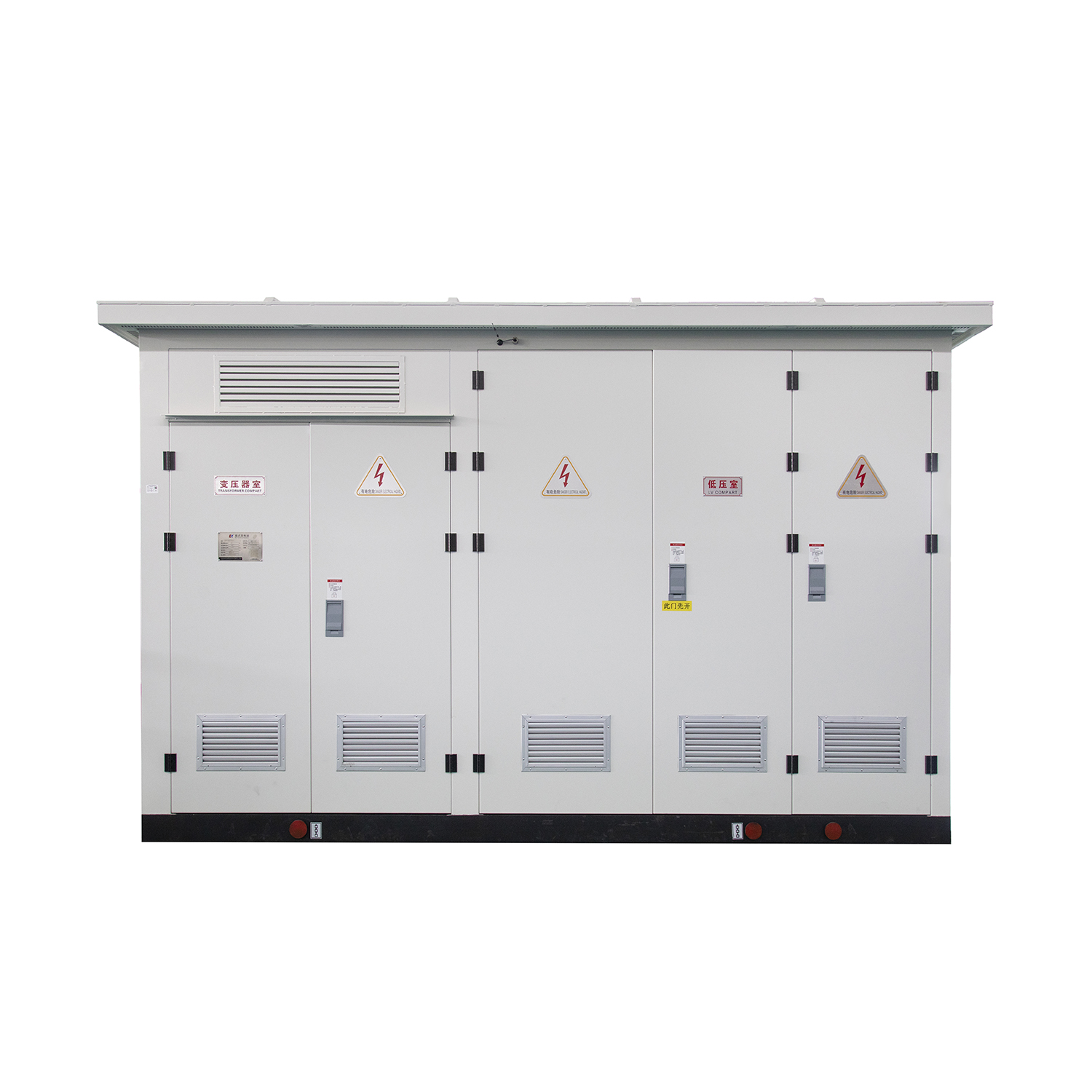
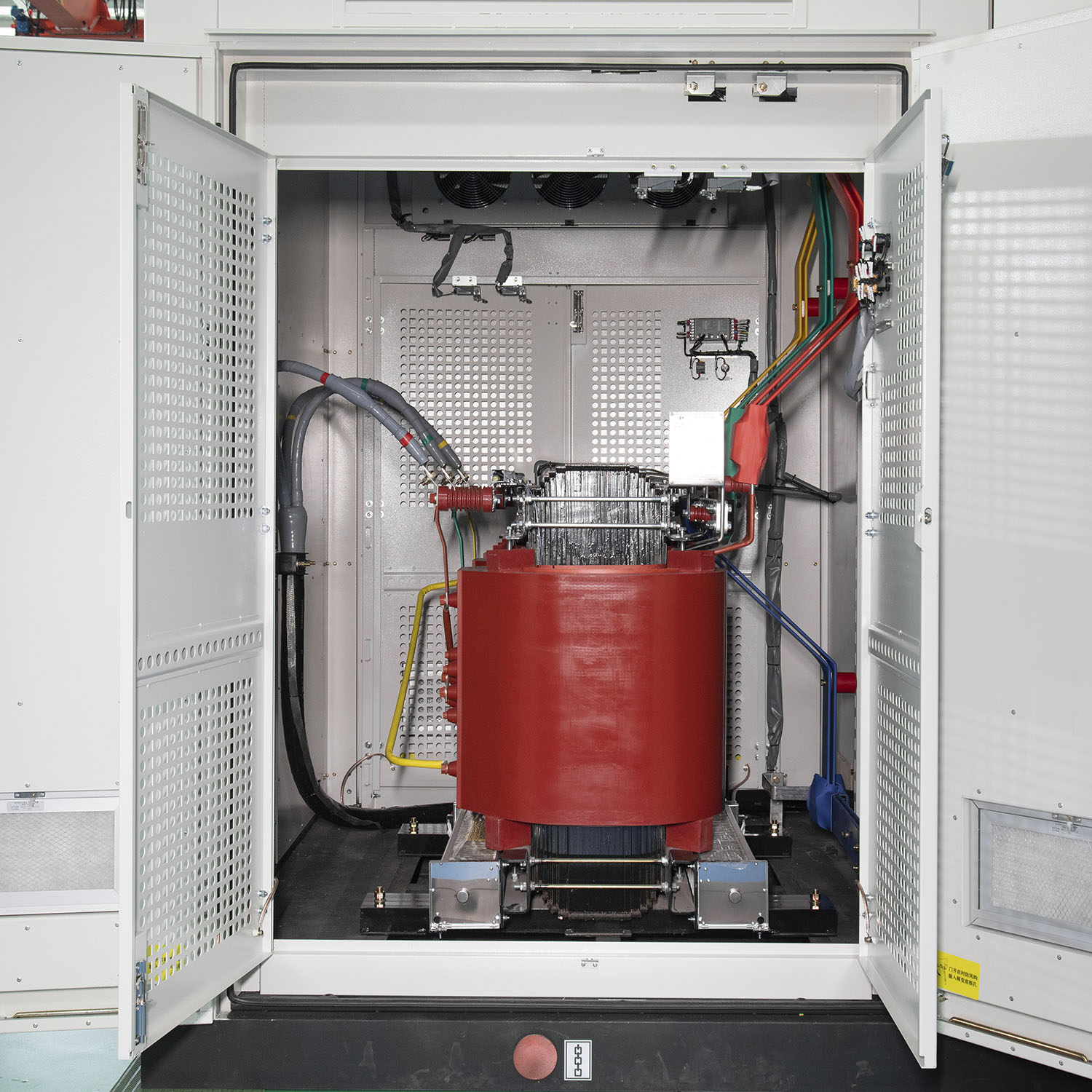
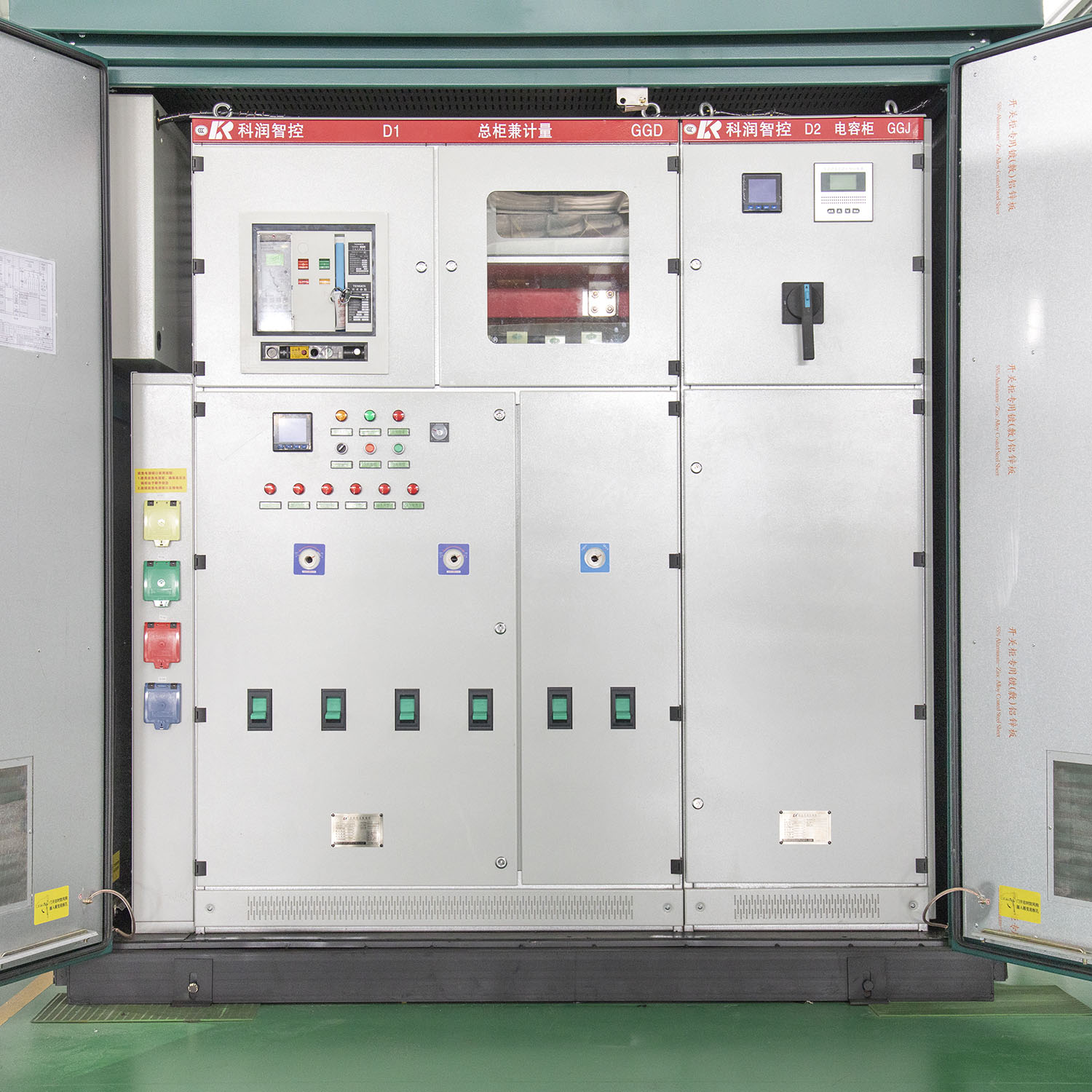
• A compact substation is a factory-assembled, metal-enclosed unit integrating medium-voltage switchgear, distribution transformer, low-voltage switchboard, and auxiliary systems within a single prefabricated enclosure. Its coordinated insulation, internal arc containment, and optimized thermal management support safe operation and reliable power distribution, while standardized interfaces and modular configurations simplify engineering, reduce on-site work, and streamline project execution and overall long-term asset performance.
Application
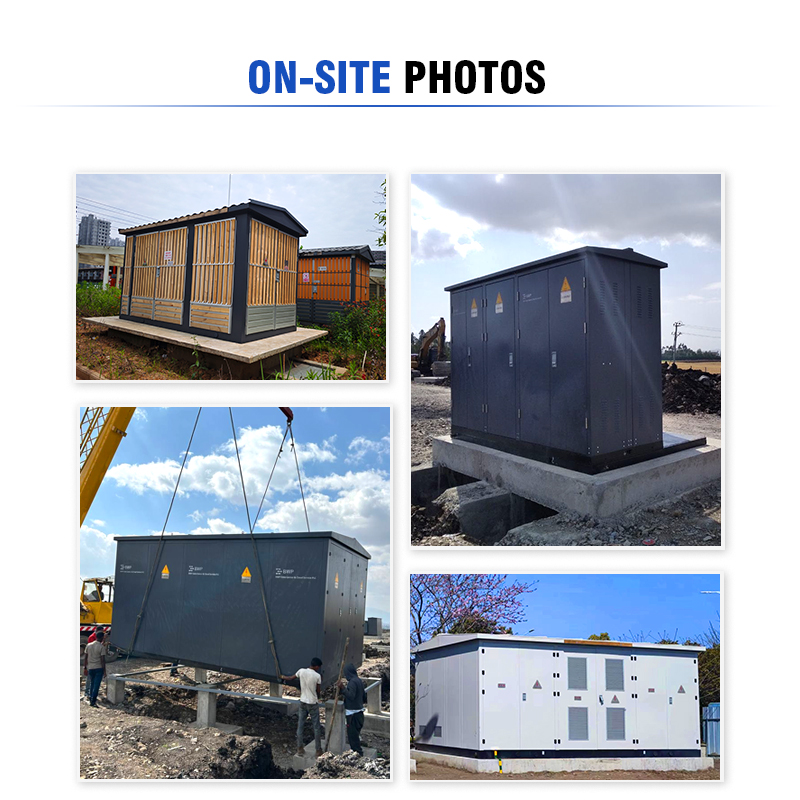
• Compact substations are applied in urban distribution networks, renewable plants, industrial facilities, data centers, and infrastructure projects to provide localized MV/LV transformation, protection, and metering. Their prefabricated, enclosed design supports rapid deployment, constrained footprints, and standardized interfaces, reducing on-site work while enhancing operational safety, reliability, and maintainability for new installations, expansions, and retrofit upgrades in diverse climates and regulatory regimes.
Advantages
• Compact substations offer significant advantages by combining multiple functions into one prefabricated, tested unit. They reduce civil works, shorten installation time, and limit site interfaces, lowering coordination risk. Optimized internal clearances, earthing paths, and cable management enhance safety and maintainability, while standardized configurations and ratings streamline design, procurement, approvals, and repeatable deployment across diverse distribution, industrial, and renewable projects.
Feature
• Options for ring-main or feeder configurations, protection schemes, and metering layouts support flexible network topologies. Environmental, fire, and acoustic performance can be tailored to site requirements, enabling reliable operation in demanding urban, coastal, or industrial environments.
Environmental Information
• Sealed tank construction
Compartment• Special waste disposal considerations
• Insulation temperature limit: 120 °C
• Temperature rise: 65 °C (standard); 55 °C or 55/65 °C (optional)
| Compartment | Typical configuration | Function and user value |
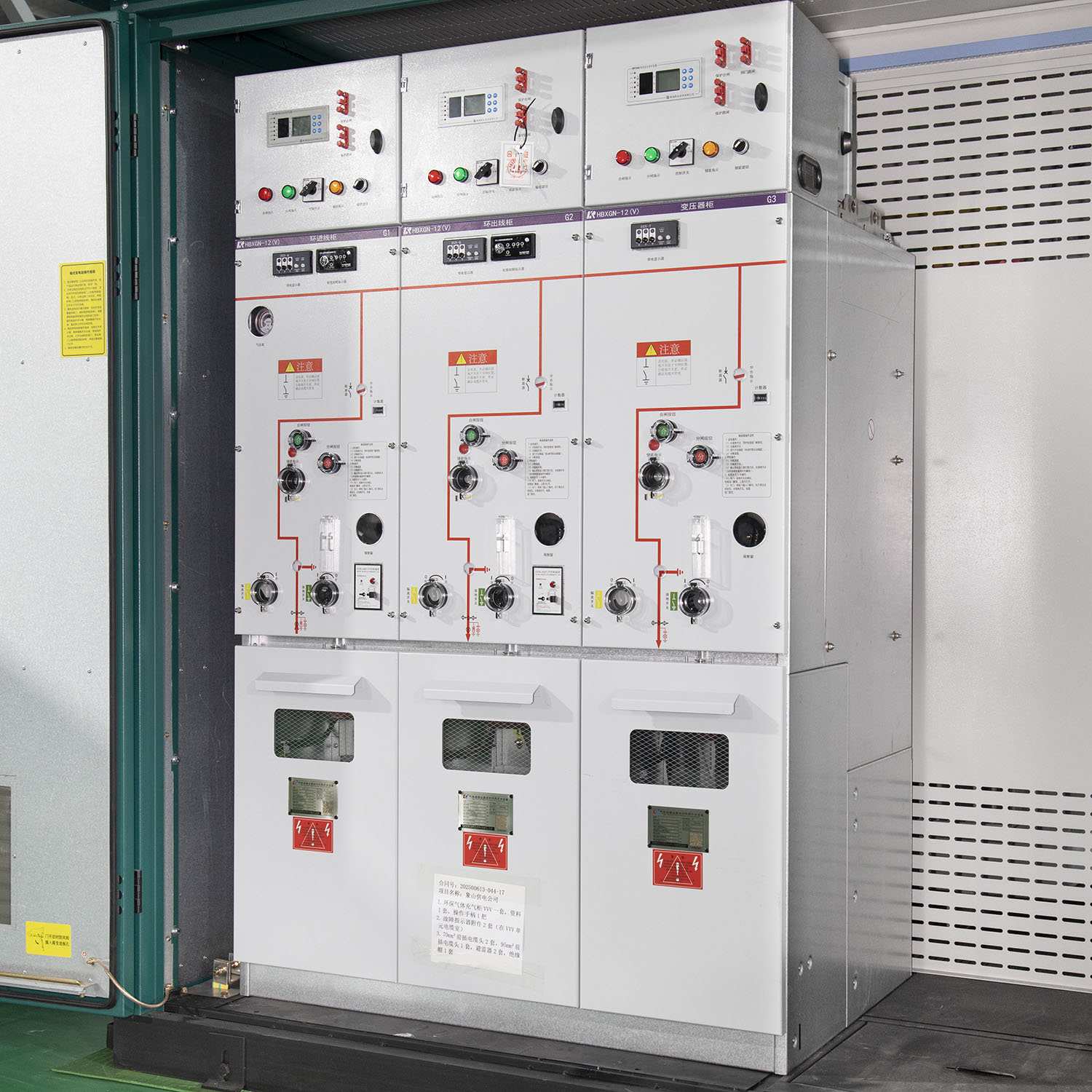
| MV switchgear | Metal-enclosed cubicle with load break switch or circuit breaker, earthing switch, current and voltage transformers, surge arresters, and protection relays. | Provides safe MV isolation, fault interruption, and protection coordination, improving network reliability and operator safety. |
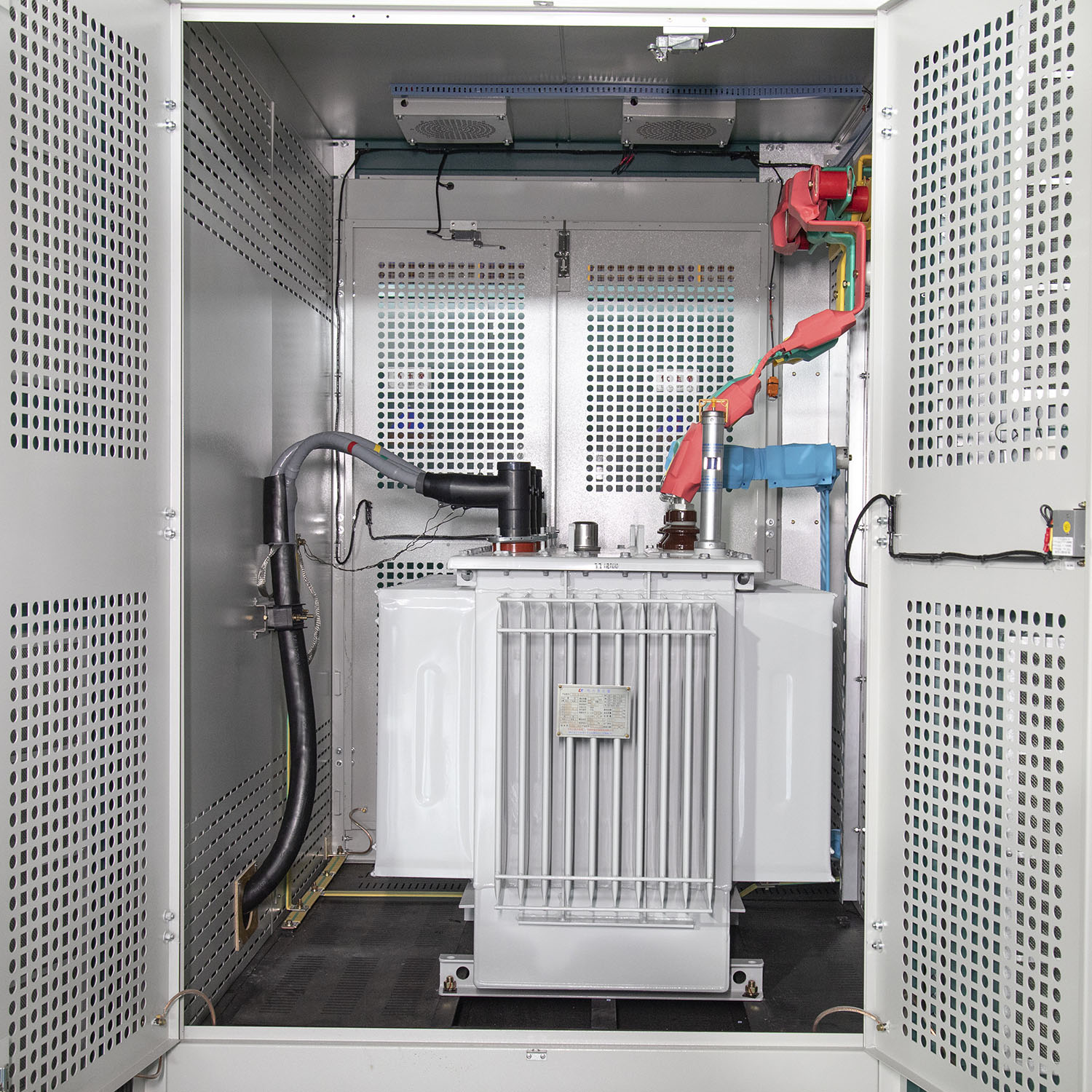
| Transformer | Oil-immersed or dry-type distribution transformer with HV/LV bushings or cable boxes, tap changer, temperature monitoring, and protection devices. | Steps medium voltage down to utilization levels with controlled losses, thermal monitoring, and safe cable interfaces. |
| LV switchgear | Formed or modular LV panels with incoming/outgoing feeders, molded-case or air circuit breakers, busbars, metering, and power quality monitoring. | Distributes LV power to feeders with selective protection, enabling safe maintenance, flexible load expansion, and metering. |
| SCADA system | RTU or PLC, communication gateways, I/O modules, HMI interface, and networked sensors for status, alarms, and measurements. | Enables remote monitoring, control, and data acquisition, supporting faster fault response and informed asset management. |


